

 Our Worlds
 Stay at the park
 Animal Encounters
 Activities not to be missed
 Inspirations and discoveries

/--/uploads/2023/12/app-store.png)
/--/uploads/2024/02/google-play.png)
/--/uploads/2026/01/1080x1080_EDENYA-1.jpg)

/--/uploads/2025/11/Medium-Estivales-27.jpg)
The Voice of the Garden
With The Voice of the Garden we share the words of Éric Domb, president and founder of Pairi Daiza. This series of texts opens a more intimate window onto the Garden: its emotions, inspirations, the encounters that shape it, and the reflections that guide its evolution.
The eighth voice of the Garden

Among all the voices of time and of humankind, there is one that seeks neither to please nor to convince. It simply reminds us of what we already know, yet prefer to forget: life is not protected with ideas, but with deeds.
CLEAN HANDS OR HANDS THAT CARE?
Protecting an animal is not an opinion. It is a responsibility. Not a speech, but a duty.
There are two ways to love animals.
Those who act.
And those who talk.
The first rise early. They care, feed, clean, and keep watch. They stay when suffering continues. They take on what others refuse to see. They are the carers, the vets, the extraordinary shelter volunteers, and the teams working on the ground. They carry life, concretely. Without them, animals die. Fast.
The others get outraged. They denounce, accuse, simplify. From a distance, they hand out good and evil. But they do not care. They do not feed. They do not take responsibility. They speak of life without ever carrying its weight.
And yet, they are the ones we listen to.
Because outrage is easy. It doesn’t dirty the hands. It doesn’t tire you. It demands nothing.
It even gives a clear conscience.
Outrage is the luxury of a spectator. Care is the duty of the actor.
A mechanism has taken hold. Emotion attracts attention. Attention attracts money. Money sustains the discourse. And the discourse needs the problem to continue.
Their donations fund communication. Our resources fund conservation.
A real solution, on the other hand, is disruptive. It ends the story. It erases the image. It makes denunciation unnecessary.
So it is opposed.
Not always openly, but systematically: doubt is sown, delays are imposed, credibility is undermined. Not because the solution doesn’t exist, but because it works.
An animal that is genuinely cared for serves no other purpose… except to live.
Our hands are often dirty. But our consciences are clear.
And that makes people uncomfortable.
So let us stop looking away.
The question is not ideological. It is stark and uncompromising.
Do we want to help animals, or do we want to keep talking about them?
An animal does not live in a debate. It lives in a body. With hunger. With pain. With urgency.
And that cannot be addressed with words.
It is addressed with hands.
Hands that feed.
Hands that care.
Hands that stay when no one else is watching.
Everything else is show.
We claim to defend life, while destroying the bonds that make protection possible. We call it liberation. Often, it is erasure.
Less connection.
Less knowledge.
Less attachment.
And in the end: nothing left to defend.
So only one question matters.
Who is there when action is required? When responsibility must be taken? When there are no slogans, no cameras, no audience?
Not in a text.
Not in a principle.
Not in outrage.
But in front of an animal. Real. Dependent. Alive.
Today.
Now.
There are those who talk about animals.
And those who respond to them.
The first protect an image.
The second protect lives.
Animals don’t care about opinions.
They need hands.
Éric Domb
The seventh voice of the Garden
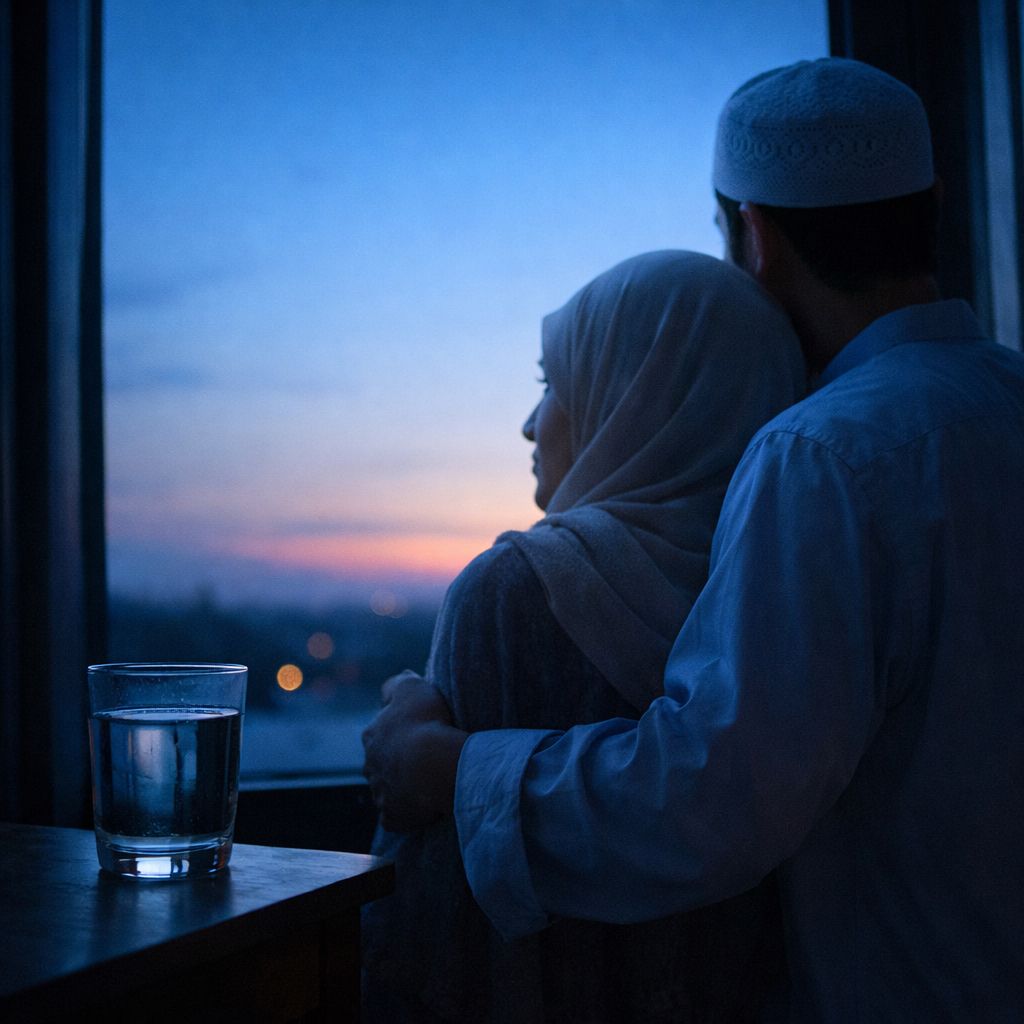
In this month of Ramadan, the Garden bows silently to those who choose patience, self-restraint, and generosity.
The Voice of the Garden is not an opinion.
It is a moment in which we fall quiet.
A moment in which we listen to the heartbeat of humanity,
seeking light.
At Christmas, we spoke of a birth.
Of vulnerability entrusted to the world.
Today, we look to another gesture.
Before dawn, millions of women and men rise, in silence.
The house still sleeps.
Sometimes it is cold.
A small flame lights a corner of the table.
Some bread. A little water.
Perhaps a smile,
Before stepping back into the night again.
They know that soon they will drink no more.
That they will eat nothing until evening falls.
The day stretches long.
Thirst becomes a presence.
Hunger swells like a whisper in the stomach.
It clutches the throat.
It reminds us that the body is no master,
only a fragile promise.
No one watches
No one applauds.
Perhaps this is where the greatest beauty truly lies:
The choice of restraint,
without witness, without display.
In a world that urges consumption, they learn to wait.
In a world that shouts, they learn silence.
And when evening finally returns,
A trembling hand offers a glass of water.
Another hand receives it.
Lips touch the water.
A shiver, almost childlike.
As if life, all at once, begins again.
In the Garden, the trees endure winter silently.
Their bareness is not an end,
but the promise of purer sap.
Ramadan carries the same quietude:
creating emptiness
to let the light through.
Believing or not believing matters little.What touches is the quiet faithfulness of effort,
the infinite tenderness of an unseen gesture.
Tonight, somewhere in the world,
a mother offers her child a glass of water.
Their eyes meet.
No words are spoken.
Then someone whispers, “thank you”.
Very softly.
As one speaks only the most essential things.
In that single word lies everything:
Fatigue, gentleness, gratitude,
And that fragile light
That arises when a person thinks of another
Before thinking of themselves.
There, beauty is born.
Where beauty awakens love.
Éric Domb
The sixth voice of the Garden
We often speak of numbers, successes, rescues—of what is visible.
But what truly endures often rests on unnamed shoulders, in bright days as well as in the darkest moments.
The sixth Voice of the Garden
Addressed to those who are never named
The world speaks a lot.
It speaks loudly.
It speaks quickly.
In that noise, those who hold it upright disappear.
If you are still there when everything wavers and words fall short,
then this Voice is addressed to you.
To you who remain when others withdraw, while we must go on—because it matters.
To you who do not get up in the morning hoping to be thanked by nightfall.
You don’t even think about it.
To you who do what must be done, out of loyalty to what truly counts.
And then step aside.
Often, no one notices you.
A door closes.
The day continues.
And yet, you stayed.
Sometimes tired, often silent, but always standing.
Sometimes you wonder how long you can keep going,
and still you do.
You support.
You care.
You help.
You console.
You remain.
And so, very simply, something continues to exist.
You expect neither gratitude nor mention.
And yet, because of you, something remains possible.
We find you where humanity might falter,
and where, through your invisible gestures, it does not.
We find you where it would be easier to leave,
and where someone nevertheless chooses to stay present.
If these words bring a face to mind,
or if you recognize that weariness that needs no words,
then they are for you.
So I say to you:
Thank you.
Thank you for what you carry without it ever being named.
Thank you for what you keep upright without display.
Thank you for preserving what it means to be human, even when everything urges you to let it go.
Someone remains.
And precisely because someone remains,
not everything is lost.
Éric Domb
The fifth voice of the Garden
For those who still hope that life will spare the ones they love.
Dear Friends of Pairi Daiza,
In this place where beauty unlocks hearts, some words must be spoken softly.
These are my wishes.
From the very first day, I have walked through this Garden with you.
As the year draws to a close, the same scene returns.
Screens light up, messages cross paths, everyone searches for the perfect phrase… and in the end, each of us lays down a wish much like all the others: success, luck, happiness.
Behind these familiar words, only one prayer remains, ancient as human fear itself, simple and universal:
“May those we love be protected, surrounded, never alone.
May no one fall.
Not this year. Not yet.”
So what becomes of us when our most sincere wishes change nothing?
Life sometimes moves in silence.
An ordinary morning passes. A familiar door opens, and suddenly someone is no longer there.
A voice.
A laugh.
A gesture once made in a hallway.
And the world becomes too vast for a single heart.
Then silence no longer soothes.
It settles in.
And we must learn how to breathe again.
For some among us, that day already lies behind them.
They live with a chair left empty, with a name whispered without a voice, with an absence that slips into the simplest gestures: setting the table, closing a window, hearing a song that returns too soon.
They still move forward, accompanied by that absence.
They still smile.
Some of the smiles you see today were torn from very dark nights.
They come from far away.
If this Garden exists, it is not to make sorrow disappear.
It exists so that sorrow may not be judged.
So that one may walk more slowly, look more closely, and lay down—without words—what weighs too heavily.
Sometimes, someone comes closer and sits beside us.
They ask for nothing.
They seek nothing.
They stay.
And something holds.
What we receive one day, we give back later.
By becoming, for someone else, what life promises no one.
To be there.
To be gentle.
To be the one who holds on when another falters.
To be that place where fear breathes a little less loudly.
Animals are not angels.
Wildlife is not gentle.
But they preserve what we sometimes let slip away: the real.
Between what they are and what they show, there is no distance.
That faithfulness to what matters most does not erase sorrow.
It supports it.
And sometimes, that is enough.
Trees, too, know what cannot be undone.
They bend.
Sometimes they break.
What is broken does not grow back.
So they live around their wound.
They work around it.
They adjust to it.
And they continue to offer shade with what remains.
They are not admirable because they endure, but because they still give after they have given way.
They teach us that what endures is not what remains intact,
but what continues to love, despite the fracture
I do not wish us a path spared of hardship.
Life obeys no wish.
I wish us something more humble and more necessary: presence.
Life promises nothing.
Presence, however, keeps it word.
May we be for someone this year,
The hand that holds back the night
before it carries everything away.
And may someone, later on, be able to say:
“I was barely holding on.
And yet, I remained standing.
Because I was not alone.”
Because we let their words tremble.
Because we took their hand without conditions.
Because we allowed their pain to pass through ours, without looking away.
And sometimes, a single act of kindness, just one,
Offered at the right moment,
is enough to change the course of a life.
Theirs.
Ours.
Or both.
So, from the bottom of my heart, I wish you that light which depends on nothing.
The one that passes, fragile and steadfast, from one heart to another, as long as we watch over one another.
And above all, may the light each of us carries never fade into silence.
May we be, for one another, what softens the night when day is slow to return.
Éric Domb
Why do we celebrate Christmas?
Dear Friends of Pairi Daiza,
Within each of us lies a memory of Christmas.
A light shining through the night, a shared table, a scent of childhood.
It is more than just a celebration: it is a bond.
Today, some wish to replace Christmas with “winter holidays.”
But winter is not a celebration, it is a season.
Christmas, however, is a heartfelt impulse.
In recent times, words have been changing.
We erase names, wipe out roots,
and polish language until it becomes a mirror without reflection.
“Winter holidays,” they say.
But these hollow words evoke neither hope, warmth, nor shared joy.
What remains is merely two weeks off, soulless and silent.
And little by little, under the guise of neutrality,
we erase what gave the seasons their heartbeat: their symbols, songs, and words.
In trying to flatten everything, to make all acceptable, we end up including only emptiness instead.
Because inclusion without memory ends up welcoming no one at all, it erases everything.
And sometimes, it goes even further.
We believe we unite by stripping away what makes us human.
We replace faces with smooth, indistinct shapes meant to represent everyone, but in truth, they resemble no one.
All around the world, from the villages of the Sahel to the megacities of Asia and North America, from the mountains of Latin America to the countryside of Europe and the islands of the Pacific, faces are what connect us.
A face carries a story, dignity, and light.
Erasing faces for fear of causing offense is to forget that it is precisely those faces that heal wounds: the gaze of a child, a mother’s smile, the kindness of a stranger.
Cultures differ, languages differ.
But the face is universal: humanity’s first language, the first proof of presence, the first spark of peace.
A society can live without belief, but not without passion.
When everything grows tepid, the world loses its music.
Christmas is also the tenderness of our origins.
The tree of our childhood, its fragile ornaments, the scent of the forest, the glimmer of lights on frosted windows.
It was never about wealth; it was the promise of a moment when, for one evening, everyone stood just a little closer.
At the heart of this celebration lies the Christmas crib.
Not a symbol of power, but of poverty.
A stable without comfort, the breath of animals as the only warmth, a bit of straw as cradle.
An exhausted woman, a worried man, and in their arms, a fragile child…
Nothing simpler, nothing more genuine.
Perhaps this is the Christmas message: light can be born in the cold, and it only takes an open heart to illuminate the night.
Together, in our Garden, we will celebrate Christmas.
Because this celebration speaks of love, birth, and light.
Because it honours life that endures the cold.
And because a world afraid of its own words is a world that will lose its soul.
In time, our Garden will also welcome the traditions of the Middle East, the cradle of the three great religions of the Book and of the civilizations that preceded them.
There too, we will celebrate what unites us: faith in life, tenderness, and shared light.
And we will celebrate the beauty of other traditions as soon as they carry the same message: peace, kindness, and sharing.
Whether Diwali, Hanukkah, Eid, or the Lunar New Year,
each honours the same triumph: the inner light that resists the darkness.
The world’s beauty lies in its diversity, not its erasure.
When rooted in love, beliefs illuminate rather than divide.
They remind us that light is not ours to keep; it is meant to be shared.
In the eyes of a child, an animal, a stranger, it takes a thousand sacred forms.
Light returns everywhere.
Christmas is but one name among a thousand.
It is the flame that humanity has protected from the wind since the dawn of time, a flame that shows life is stronger than fear.
So yes, in our Garden, there will be Christmas trees, lamps, and carols.
Not to impose faith, but to preserve what warms and unites.
Christmas is not a legacy to hide.
It is a promise: to keep the light alive, even when it flickers.
And if we keep it alive together, it will never go out.
Éric Domb
The second voice of the Garden
Dear friends of Pairi Daiza,
The Voice of the Garden is a simple place to speak.
Neither a press release, nor a speech, but a shared confidence.
It sometimes speaks about the park, sometimes about the world,
but always from this living place where nature, animals, and beauty
teach us something essential every day.
Beauty lifts us up like a light passed from hand to hand.
When it reaches the heart, it doesn’t merely move us:
it transforms, it clarifies, and sometimes it disturbs,
because it lays bare what is false, noisy, and vain.
It reminds us that what is beautiful does not deceive,
and what deceives is never beautiful.
This is my second Voice of the Garden.
Recently, a friend sent me a petition related to tragic events.
A brief message, both warm and insistent: “Will you sign? And share it?”
I read it.
The way things were presented was convincing enough to flatter good intentions.
A fierce indignation, perhaps sincere, but without nuance.
Not the slightest crack, not the faintest doubt through which any light could pass.
I feel it: we live in a time where nuance is slowly disappearing,
as if you must choose a camp and wave its flag.
And once again, the message snapped like an order:
refusing to sign meant looking away.
Worse, it meant becoming complicit in what had to be condemned.
Saying no to a friend feels like splitting yourself in two:
one part wanting to remain loved, the other unwilling to lie.
You fear the silence, the chill, and then the distance that settles in.
But sometimes loyalty requires the courage to refuse.
I felt sorrow at disappointing him, and even more, a rising revolt.
Not against him, but against this moral posture that confuses virtue with its own performance.
I did not sign.
Not out of indifference, but because this text did not wish to understand: it sought the guilty.
It wanted to divide instead of convincing.
And I do not long for a world where anger pretends to be virtue,
and hatred wears the face of morality.
Simplism seduces; nuance asks us to think.
The first reassures, the second disturbs.
And the tyranny of attention-seeking at any cost
has slowly replaced the pursuit for truth.
Our era is often outraged in order to be seen.
It proclaims its purity while reality fades.
This is an absence of ethics that troubles, not out of malice, but out of carelessness.
And that carelessness ends up weighing heavily.
I try, like many of you,
to nourish the passions that build,
and to protect myself from those that consume.
Curiosity, kindness, the thirst to understand: these are the true flames.
The others: certainty, self-exaltation and resentment burn everything around them.
I wanted to remain faithful to what I believe is right:
That sincerity is recognised by the beauty of the gesture,
And that beauty always reveals what is true.
It is the compass.
When a gesture is beautiful, it is just.
When it is ugly, it lies.
The beauty of an attitude lies in gestures that ask for no attention:
You recognise it in loyalty, when no one expects it,
in gentleness responding to a harsh world,
in forgiveness offered without a witness,
in care given for what seems useless,
in the constancy of those who keep their word,
These gestures have something sacred: they quietly repair what fury damages.
Where beauty endures, humanity stands.
Nature lives this same truth.
The wolf kills without hatred.
The tree fights for light and, when it falls,
feeds the soil where others will grow.
The bird steals a twig to build a nest.
The ape cries out to protect its young.
Nothing is done for show. Everything serves life.
We humans have kept the strength,
but too often lost the beauty of the gesture.
We have turned goodness into theatre and virtue into a mirror for the ego.
Beauty acts differently.
It connects, it restores, it protects.
A flock of birds at dusk,
the stride of a giraffe,
the silence of a child watching.
Everything that is truly beautiful heals the world a little.
Perhaps that is what the Voice of the Garden is:
to remind us that beauty is not a backdrop,
but a living truth that guides us when everything trembles.
The false glitters, beauty illuminates.
One exhausts itself trying to appear,
the other chooses simply to be.
Éric Domb
The first voice of the Garden
Dear Friends of Pairi Daiza,
Today I feel the need to open a personal column: The Voice of the Garden, where beauty awakens love.
It will be my voice, quite simply.
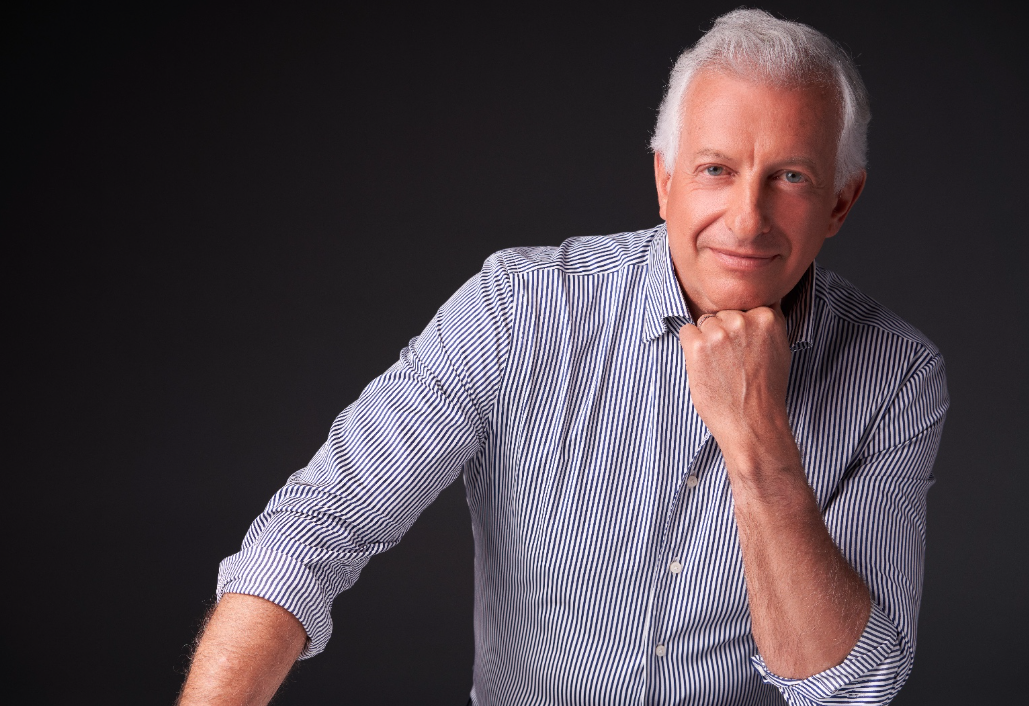
That of a man who, for thirty years, has been moved every day by the beauty of the world and wishes to share it even more-not only through the discovery of the animals, landscapes, minerals, architectures, and works of art that illustrate this beauty in our Park, but also through the words.
From time to time, then, I would like to address you directly. To those who love Pairi Daiza, to those who walk through it, marvel at it, find peace in it.
To tell you what I see there, what I learn there, what I feel, humbly, as a privileged witness to the fragile and wonderful bond between animals and ourselves.
This first Voice of the Garden speaks of this: of shared tenderness, of the science that confirms what the heart already knew, and of the love that, one day, becomes protection.
For fifty years now, science has transformed the way we look at animals.
Frans de Waal, Jane Goodall, Marc Bekoff, Temple Grandin, Jaak Panksepp, Carl Safina, E.O. Wilson…
All have revealed what we sensed deep in our hearts: animals feel, love, bond, comfort one another, play, get bored, and sometimes, they cry.
Their inner world exists.
This revolution gives zoological parks a new meaning.
A zoo is worthwhile only if it becomes a place of encounter, not possession.
Where once we confined, we now connect.
Where we used to display species, we now reveal beings.
Pairi Daiza was born of this conviction: that beauty belongs to no single species.
That the gaze of an orangutan can stir the same emotion as a child’s smile.
That between a panda mother and a human mother, there is only one language: the one of tenderness.
And that by seeing animals live without fear, humans remember what they have lost: gratitude for the miracle of life, and therefore the ability to marvel, silently, at the beauty of the world.
Some wish to abolish all zoos, as if erasing an old error.
But closing these places would save no animal.
Species do not disappear because we observe them, but because we destroy the forests where they live, the seas where they swim, the air they breathe.
They vanish beneath chainsaws, beneath nets, beneath the invisible weight of our excesses: deforestation, climate change, pollution, trade, indifference.
Even reserves are suffocating, besieged by hunger, poverty, or war.
So what remains?
The bond.
The one that makes a child, one day, meet the gaze of an animal and understand that this world, too, is looking back at them.
On that day, the child becomes a guardian of life.
This is what Pairi Daiza is: a bridge between science and emotion, between reason and tenderness.
Where beauty awakens love,
and where love, in turn, protects life.
Éric Domb
/--/uploads/2024/02/app-store.png)